
The Mind Distorted: Grossly Disorganized or Catatonic Behaviors (Part 7)

When Action Loses Its Direction
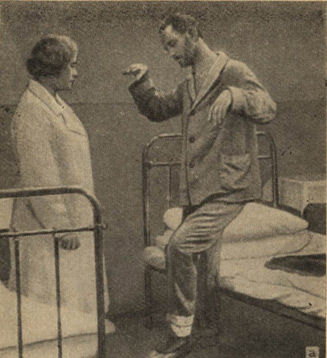
Psychosis does not only affect what a person believes, perceives, feels, or says. It can also disrupt how a person behaves, moves, and engages with their environment. In schizophrenia and related disorders, this is known as grossly disorganized or catatonic behaviors.
Disorganized behaviors are striking. In many ways, they represent the behavioral expression of the same cognitive disruption discussed in earlier articles. When thought becomes fragmented and deteriorates, behavior itself can lose structure, direction, and purpose.
What Is Grossly Disorganized Behavior?
Grossly disorganized behavior refers to actions that appear bizarre, purposeless, or markedly inappropriate to the situation. The defining feature is not simply that the behavior is unusual, but that it lacks clear goal-direction. The individual’s actions do not appear to serve any understandable objective and can shift rapidly from one activity to another without completion.
In healthy functioning, behavior is typically organized around goals. We initiate actions with an intended outcome, monitor our progress, and adjust our behavior based on context. In psychosis, these systems can break down. As a result, actions may become fragmented, impulsive, or disconnected from the surrounding environment.
An individual may begin one task, abandon it halfway through, and shift to another without explanation. Everyday activities such as eating, dressing, or leaving the house may become chaotic or poorly sequenced. In more severe cases, behavior can appear entirely random and cause significant distress and impairments in adaptive functioning.
Loss of Goal-Directed Activity
One of the central features of grossly disorganized behavior is the loss of purposeful action. Movements and behaviors may occur, but they are no longer organized toward a coherent objective.
Examples can include:
Dressing in clothing inappropriate for the environment, such as wearing multiple winter coats in the summer or going outside in minimal clothing during freezing temperatures.
Engaging in repetitive or aimless activity, such as pacing in circles for hours or repeatedly rearranging objects without any identifiable reason.
Sudden bursts of agitation or erratic behavior that appear unrelated to the environment or situation.
In some individuals, behavior may take on a childlike or regressed quality. They may laugh inappropriately, make exaggerated gestures, speak in playful or nonsensical tones, or behave in ways that seem immature relative to their age and context.
This regression does not reflect intentional silliness or playfulness. Rather, it reflects a breakdown in the normal cognitive processes that regulate behavior and social appropriateness.
Highly Inappropriate or Disinhibited Behaviors
Grossly disorganized behaviors exist on a spectrum of severity. While mild social inappropriateness exists on one end, gross disinhibition and potentially violent behaviors exist on the other.
Examples may include:
Laughing or smiling during serious or distressing situations
Making bizarre facial expressions or gestures without context
Removing clothing in public environments
Engaging in sudden, unprovoked violence
Engaging in repetitive sexual behaviors, including chronic or excessive masturbation that appears disconnected from sexual desire or gratification
In these cases, the behavior is not driven by typical motivations such as pleasure or rebellion. Instead, it reflects a failure of behavioral regulation, where the individual is unable to organize actions in a way that is socially appropriate or contextually meaningful.
Agitation and Unpredictable Behavior
In some cases, gross disorganization can lead to unpredictable agitation. The individual may become restless, pacing or moving rapidly between activities. Because their behavior is poorly regulated and not guided by clear reasoning, it can sometimes escalate into impulsive or aggressive actions.
Importantly, such behavior is not necessarily driven by deliberate hostility. Instead, it may reflect confusion, misinterpretation of the environment, or an inability to regulate impulses.
This is particularly relevant in forensic settings, where defining whether behaviors are volitional or not is an important component of our opinions
.
Catatonia: When Movement Itself Becomes Disturbed
At the extreme end of behavioral disturbance lies catatonia, a syndrome characterized by profound abnormalities in motor behavior.
Catatonia can present in several forms, including:
Stupor – the individual remains motionless and largely unresponsive
Mutism – little or no verbal communication
Posturing – maintaining unusual or rigid body positions for extended periods
Waxy flexibility – limbs remain in positions placed by another person
Negativism – resistance to instructions or attempts to move the body
Stereotypy – repetitive, purposeless movements
Echolalia – repeating another person’s speech
Echopraxia – mimicking another person’s movements
While some forms of catatonia involve immobility and withdrawal, others involve catatonic excitement, where the individual becomes extremely agitated and hyperactive without clear direction.
Catatonia represents one of the most severe disruptions of behavioral organization and often requires urgent medical treatment.
Forensic Relevance: When Disorganization Interferes with Legal Proceedings
Grossly disorganized and catatonic behaviors are particularly important in forensic settings, where a person’s behavior is often interpreted in terms of intent, cooperation, and understanding. Severe behavioral disorganization can profoundly interfere with an individual’s ability to meaningfully participate in legal proceedings.
For example, individuals experiencing significant disorganization may appear non-responsive during interviews or court appearances. They may sit silently, provide only brief or irrelevant answers, or fail to respond at all. Others may display erratic or unpredictable behavior, such as pacing, jumping up and down, laughing inappropriately, or shifting rapidly between unrelated actions. In one case that I was involved in, the defendant entered the courthouse naked in the middle of the winter.
In my practice, I have evaluated defendants who were entirely unresponsive, became incredibly hostile and aggressive, and even began aggressively masturbating. When behavior becomes disturbed to such a level of severity, competency to stand trial becomes a concern due to impairments in rational assistance and ability to engage in appropriate courtroom behaviors.
Grossly disorganized behaviors are often seen in legal insanity defenses. Many jurisdictions, including Michigan, include what is known as the volitional prong of criminal responsibility. This refers to whether a defendant had the capacity to conform their conduct to the requirements of the law (in other words, whether they were able to control their behavior). Because grossly disorganized or catatonic behaviors are inherently involuntary, individuals may engage in actions that are bizarre, chaotic, or devoid of any rational incentive or motive.
For example, a defendant may commit a crime, yet do so in a manner that is profoundly irrational or purposeless. One might steal money from a bank and then immediately set the money on fire, open packages of food in a store and begin arranging them on the floor, or randomly wander into a stranger’s home. In such cases, behaviors that are typically associated with motive (e.g., obtaining money, stealing items of value) are actually devoid of any clear incentive.
.
The Relationship Between Thought and Behavior
Grossly disorganized and catatonic behaviors are closely tied to the broader disruptions in thinking described earlier in this series. When the internal processes that organize thought begin to fail, behavior can lose its logical structure as well.
In this way, behavior becomes another outward expression of thought disorder. Just as speech can become tangential or incoherent, actions themselves may become fragmented, unpredictable, and purposeless.
Conclusion
Psychosis is often described in terms of unusual beliefs or perceptions, but its effects extend far beyond what a person thinks or hears. When the internal systems that organize cognition begin to break down, behavior itself can lose direction and meaning.
Grossly disorganized and catatonic behaviors illustrate how profoundly psychosis can disrupt the relationship between thought, perception, and action. What appears from the outside as bizarre or irrational behavior is often the outward expression of a mind that has lost its ability to organize experience in a coherent way.
Understanding these behaviors is essential not only for clinical care, but also for interpreting actions in forensic and legal contexts where the difference between purposeful and involuntary behaviors can have profound legal consequences.


Comments